




DRIP Season 1: Driving Lending Innovation on the Arbitrum Platform

Typically, incentive programs in crypto get the incentives all wrong. So DRIP (DeFi Renaissance Incentive Program) took a different approach. Managed by a committee of Entropy Advisors, Offchain Labs, and the Arbitrum Foundation, this incentive program made capital efficiency and allocation discipline its north star, with an inaugural season focused on lending markets.
Four principles guided the work:
- Keep scope honed to maximize incentive impact.
- Use iterative design with short seasons that can be adjusted.
- Encourage competition by basing allocations on performance.
- Coordinate across the Arbitrum ecosystem for best results.
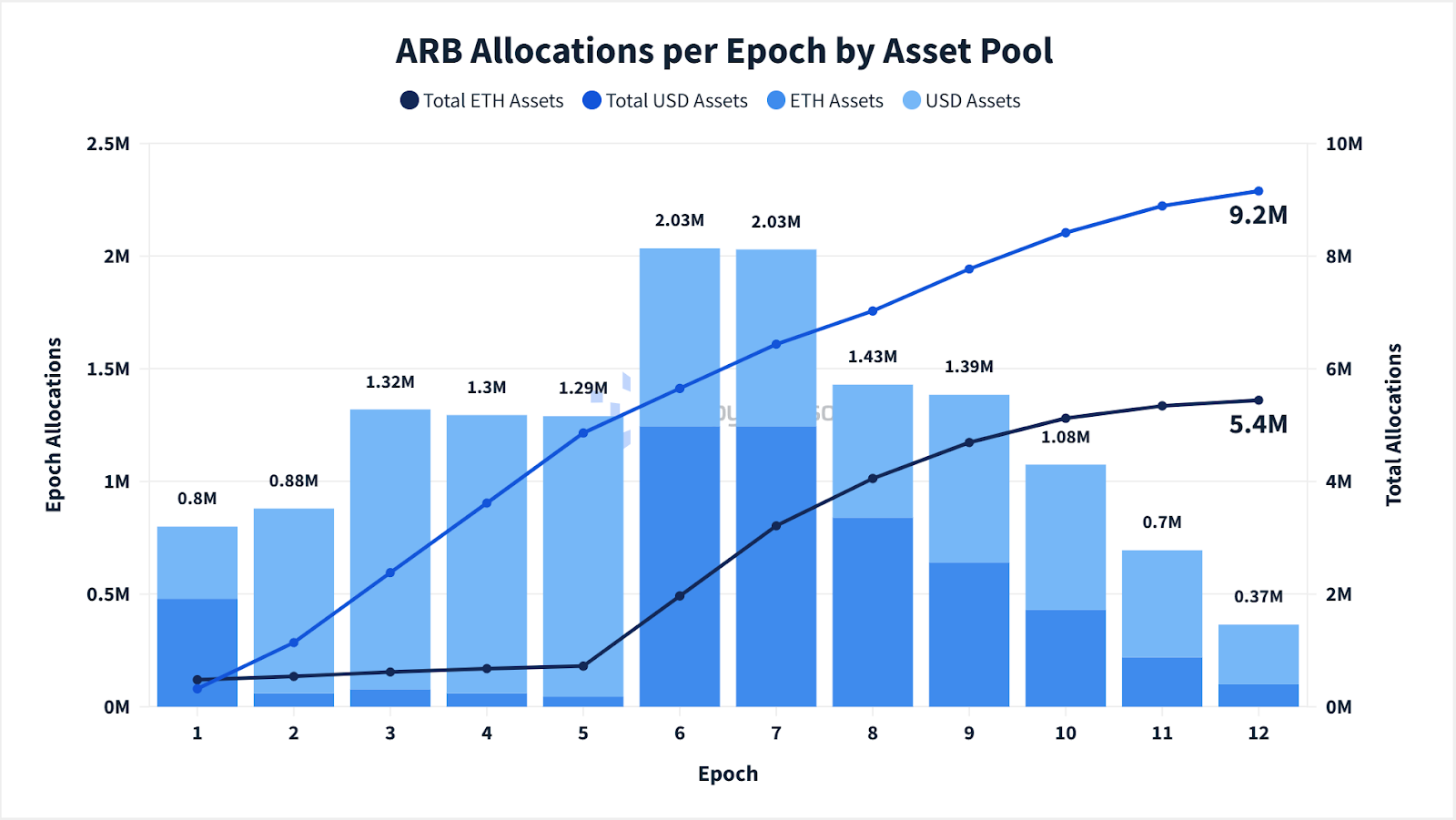
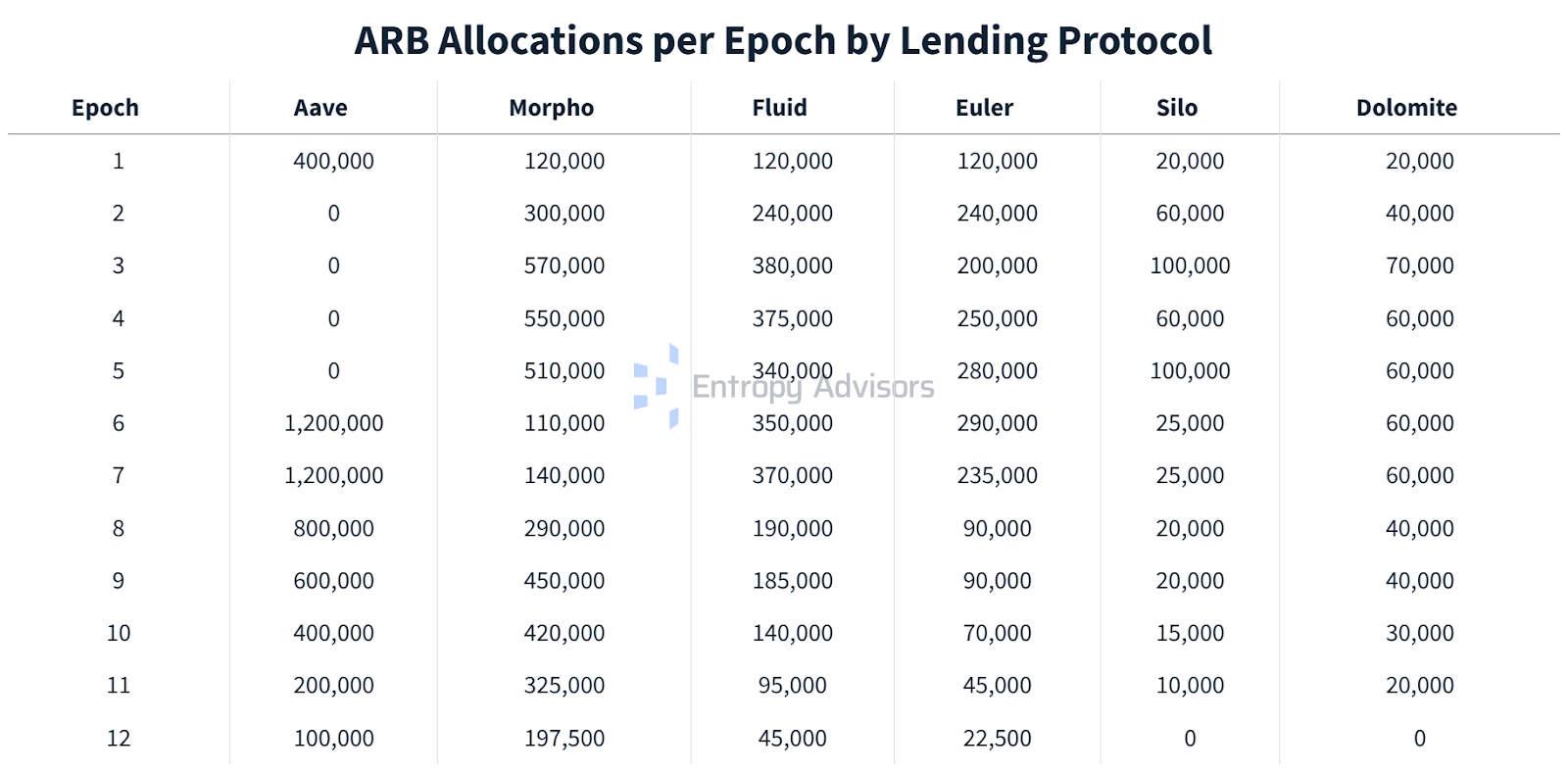
From September 2025 to February 2026, over the course of 12 two-week epochs, the DRIP program deployed 14.6M ARB (approx. $4M at allocation) across six lending protocols: Aave, Morpho, Fluid, Euler, Dolomite, and Silo, as well as two ETH and USD yield-bearing asset pools.
So, how did Season 1 fare for lending on Arbitrum? Have a look:
- USD asset markets grew 38% to ~$770M
- ETH markets grew 25% in ETH terms, to ~400K ETH
- Morpho and Euler launched on Arbitrum, with Morpho growing to $270M
- Yield-bearing stablecoin supply grew from $130M to $1B+
- ETH circulating supply surpassed 840K ETH
- DEX liquidity grew from $20M to $120M at peak
- Pendle markets approached $500M in combined TVL (from tokenized yield)
Designing Incentives that Stick
DRIP’s mission was straightforward: fuel the Arbitrum DeFi ecosystem in a sustainable way. Before launching the program, the committee consulted a variety of experts and ultimately selected Merkl as a key partner and service provider.
The DRIP framework scored protocols across six key dimensions:
- Size: Arbitrum deposits.
- Growth: Expansion during period.
- Market: Arbitrum share vs. other networks.
- Utilization: Borrows to total deposits.
- Efficiency: Growth per ARB spent.
- Breadth: Asset variety.
An adjusted cost effectiveness metric was also used to measure capital efficiency and isolate Arbitrum-specific gains from broader market movements. Season 1 came in at 51, which means for every $1 of ARB deployed, the total market size of participating lending protocols grew by $51. Meanwhile, USD assets had a cost effectiveness of 76.
When benchmarked against comparable incentive programs, DRIP showed the highest adjusted cost effectiveness with less capital deployed.
A Season of Growth
Here are the results by protocol:
- Morpho was the clear standout this season. Its market size grew by 593% to $270M, and borrowed liquidity grew by 658% to $113M. It had the highest adjusted cost effectiveness (198), and listed 24 eligible assets.
- Silo saw 103% growth in market size and 213% growth in borrowed liquidity, with the highest utilization rate of the season (55%). This happened while the protocol’s total market across chains declined by $309M.
- Fluid grew steadily, with market size up 12% to $227M, and an adjusted cost effectiveness of 86. It had the largest Arbitrum market share increase (3.2%) of any protocol.
- Aave saw a 37% decline in market size during the season, but the protocol only received ETH pool allocations, and with ETH declining over 50% during that period, the raw figures largely reflect price depreciation (utilization held steady at 42%).
- Euler declined 48% to $26M in market size. Technical constraints prevented vault-level incentive execution and limited the program’s reach.
- Dolomite was the weakest performer this season, with its market size down 60% and borrowed liquidity down 68%.
Ecosystem Wins
Charts and figures can only capture so much of what makes an incentive program successful. More than anything, DRIP Season 1 proved that thoughtfully crafted incentives can cultivate an ecosystem with new participants, fresh liquidity, tokenization opportunities, and more.
- The Lending Ecosystem on Arbitrum Expanded. The total USD asset market increased by ~38%, reaching approx. $770M by season’s end. Meanwhile, ETH-denominated market size grew by 25%. Morpho and Euler launched on Arbitrum, and today, Arbitrum is hosting every major EVM lending protocol.
- Yield-Bearing Stablecoin Supply Increased. Arbitrum’s yield-bearing stablecoin supply grew from $130M to $1B+, with Spark, Maple, Theo, and Resolv bringing their assets to the network.
- ETH Circulating Supply and Borrowing Activity Grew. Arbitrum’s circulating ETH supply reversed its downward trend, and now has over 840K ETH circulating on the network. This also boosted supply-side and borrow-side liquidity in lending protocols by ~40%.
- DEX Liquidity Got Deeper. During DRIP, liquidity grew from $20M to $120M at peak. Though it retraced at the end of the season, the capital stayed in the network and migrated to other protocols, including yield-bearing stablecoins like USDe, and Pendle for its yield and point strategies.
- Yield Tokenization Grew as a Primitive. Pendle led the charge, peaking at ~$500M in combined TVL, with USD.AI and Theo (thBILL) driving most of that growth. Although TVL has since retraced, there is clearly demand for yield tokenization, and it will be an interesting one to watch.
The DRIP Playbook
With DRIP Season 1, it was proven that a carefully crafted incentive program can expand an ecosystem and bring real, sustained value to Arbitrum. Even with the market turbulence and risk-off mentality in October, DRIP grew USD and ETH markets, brought Morpho and Euler to the network, expanded yield-bearing stablecoin supply, and deepened DEX liquidity.
When compared with previous Arbitrum incentive programs (totaling over $100M), it’s clear that DRIP is in another class for its capital efficiency and allocation strategy. It is now the foundation for Arbitrum’s DeFi ecosystem, for new DAO incentives, and for everything that comes next.
Arbitrum Everywhere.